



Writing open questions into your fiction
Speculative fiction has always thrived on mystery, and the most haunting tales leave readers holding onto a question long after the final page. Australian writers have long understood this instinct, weaving unresolved threads into stories that echo across the wide, quiet spaces of the continent. Whether drafting a fantasy set in a reimagined outback or a piece of Tartan Noir soaked in Melbourne laneway rain, the power of an unanswered question can transform a good story into an unforgettable one.
The craft of asking without answering sits at the heart of much contemporary short fiction, pairing naturally with the themes explored in noir and speculative work. A reader who finishes a story with a lingering question feels engaged in a way that closed endings rarely achieve. The challenge lies in planting the question clearly enough that it registers, yet leaving enough shadow that the reader's imagination fills the gaps. Australian publishers and competitions increasingly reward work that demonstrates this confidence.
For writers in Australia, the local landscape offers particular gifts for this kind of storytelling. The vast distances, the shifting light, the way conversations drift at a suburban barbie in Brisbane or a coastal walk in Sydney, all of these details ground a story in sensory reality even as its central question remains unresolved. This grounding prevents ambiguity from feeling arbitrary; the world feels solid while the mystery stays open.
Understanding how to construct such a story requires both instinct and technique. The instinct comes from reading widely and noticing what lingers in memory. The technique can be learned, broken down into choices about question, character, structure, and trust. The sections that follow explore each element in turn, offering practical guidance for writers hoping to craft stories that ask their questions and leave them ringing in the air.
Choosing the right question
Not every question deserves to hang unanswered. The most effective open questions emerge naturally from the story's central tension, whether from a character's moral dilemma or a world-altering mystery. A question about identity, loss, or the nature of reality tends to linger longer than one about plot mechanics. Let the question that haunts your protagonist most deeply become the unresolved thread.
Consider the difference between a question that demands resolution and one that invites reflection. "Who killed the station master?" pushes toward an answer, while "What did the protagonist sacrifice when she walked away?" opens a space for interpretation. The best unresolved questions are often philosophical or emotional rather than purely factual.
Building atmosphere around uncertainty
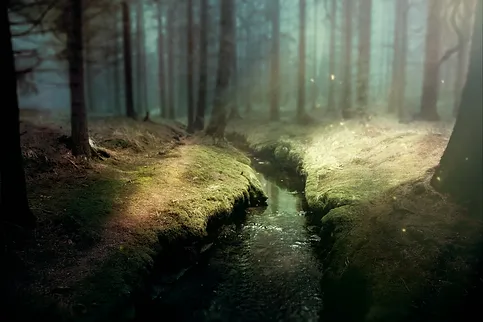
Setting does much of the heavy lifting when a story refuses to resolve. Weather, landscape, and the textures of a place contribute to a mood of ambiguity. A fog-bound morning in Adelaide's parklands, the long shadows of a Hobart winter, the relentless heat shimmering over the Nullarbor, each environment carries its own emotional register that amplifies a story's central mystery. Atmosphere becomes a secondary character, reinforcing the sense that something remains hidden beyond perception.
For writers exploring darker genres, the cold rainy settings common to Tartan Noir provide a ready-made vocabulary for atmospheric ambiguity. Rain against windows, slick cobblestones, the muffled quiet of a city under cloud cover, all support a story that chooses not to explain itself. When the world itself feels uncertain, the unanswered question feels right at home.
Letting characters live with not knowing
Characters who accept uncertainty make the most compelling guides through unresolved narratives. A protagonist who demands answers at every turn creates friction with a story designed to withhold. Instead, craft characters willing to sit with ambiguity, who recognise that some questions resist clean resolution. This acceptance can become a form of character growth, a movement toward a more mature relationship with the unknown.
Australian fiction offers rich models for this acceptance. Think of the quiet stoicism found in outback literature, where characters have always understood that some things cannot be known or controlled. This cultural inheritance gives local writers a natural advantage when exploring stories that refuse to tie off every loose end.
Structuring the narrative arc
An unresolved ending still needs structure. The question must be planted early enough that the reader has time to engage with it, and the story must build toward a moment where the question feels urgent even as the answer slips away. Avoid introducing ambiguity only in the final paragraph; readers need time to invest in the mystery. Plant the question in the opening pages, then let the middle sections deepen it.
Consider a structure that mirrors the experience of not knowing. A story might move through cycles of partial revelation, each raising new questions even as old ones recede. The MacGuffin, that classic narrative device, often functions in noir and fantasy by redirecting attention away from ultimate answers and toward the journey itself.
Drawing from genre conventions
Speculative fiction, fantasy, and noir each offer their own traditions of unresolved storytelling. Noir has long understood that some crimes go unsolved and some motives remain murky, while fantasy often embraces mythic cycles and prophecies that resist literal interpretation. Tartan Noir in particular, with its Glasgow-flavoured melancholy translated to Australian contexts, provides a template for stories that prioritise mood over resolution.
Local Australian genre communities, from the Brisbane Writers' Workshop to Melbourne's Speculative Fiction gatherings, regularly discuss how to honour these traditions without becoming predictable. The key lies in knowing the conventions well enough to subvert them subtly, offering readers familiar patterns while introducing just enough strangeness to keep the central question alive.
Trusting your reader
The hardest part of writing an unresolved story is trusting that the reader will meet you halfway. This means resisting the urge to over-explain, to provide footnotes to your own narrative, or to soften the ambiguity with hedging language. Trust shows in the confidence of the prose, in the willingness to leave a scene abruptly, to end a paragraph on an image rather than an explanation.
Australian readers, particularly those engaged with independent literary platforms, have shown a strong appetite for work that respects their intelligence. Competitions judged by editors at venues like Inspiring Fiction have noted this trend, with shortlisted entries demonstrating a willingness to leave space for the reader's own interpretations.
Practices for open-ended storytelling
- Plant your central question early and let it breathe across the narrative.
- Choose settings and weather that reinforce ambiguity, drawing on Australian landscapes.
- Allow your protagonist to accept uncertainty as wisdom rather than failure.
- Study genre conventions in noir, fantasy, and speculative fiction.
- Read widely in open-ended traditions, noting how other writers structure withholding.
- Revise with a focus on trust, cutting passages that explain what the story has shown.