



Portraying the Aftermath of a Magical Disaster in Short Fiction
A city street that smoulders for weeks. A schoolyard where every clock stopped at the same minute. A coastal town whose tides now answer to a stranger's name. Magical disasters leave traces beyond scorched earth, and writers have long been drawn to the strange geology of catastrophe. The moment after the spell shatters is often where the real story begins.
Short fiction demands economy when tackling such weight. With only a few thousand words, every paragraph must advance plot while conveying the texture of loss. A magical event might be spectacular, but it is the hush afterwards that gives a story its gravity. Writing the aftermath well means trusting the reader to feel the shockwave in what comes next.
Australia offers a familiar well of reference. The country knows disaster intimately, from the blackened gullies left after the Black Summer bushfires to the inland rivers that flood entire shires in a wet La Niña. Many local speculative authors weave this familiarity into stories set in suburbs that feel quietly uncanny.
Building a Landscape Scarred by the Arcane
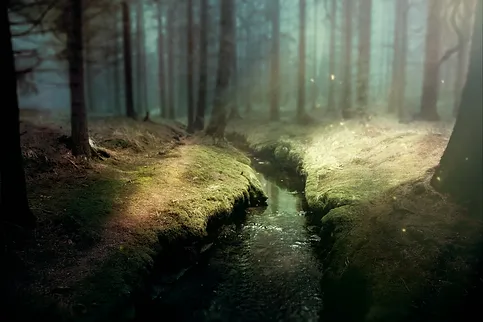
The physical world after a magical catastrophe behaves differently from a world after a bomb. Charred timber might regrow in impossible colours, or rain might fall upward from a cracked footpath. Writers should anchor these impossibilities in sensory specifics: the smell of ozone mixing with eucalyptus, fine red dust on a windowsill, frogs calling at midday in a Perth park that has not heard rain in months.
Geography shapes how disaster registers. A spell that levels a Brunswick terrace house feels different from one that floods a sheep station in the Riverina, or opens a sinkhole in a Hobart street. Each setting carries its own rituals of recovery. Country towns have quiet protocols; cities turn bureaucratic, with councils and insurers entering where neighbours once did.
The land also refuses to release everything. A paddock that grew twisted metal after a spell, a beach where shells whisper in a dead dialect, a Brisbane riverside path where footlights burn blue at dusk. These lingering details echo the habit of Australians returning to fire-affected bushland for years, scanning for regrowth.
The Emotional Geometry of Survivors
Aftermath writing lives or dies by its survivors. A character who has lost everything will not behave with neat eloquence; they will be distracted, practical, occasionally cruel. They will argue about paperwork, forget to feed the dog, laugh at the wrong moment. Grief finds solace in strange corners of routine: a flat white at a deserted Adelaide cafe, a long drive along the coast at first light.
Mental residue should be sketched rather than explained. A single image, a flinching hand over a candle flame, can carry the weight of pages of analysis. Short fiction rewards compression. Varying the emotional register across characters also helps: one survivor might volunteer with the SES, another retreat into silence, a third sell up and start over in a different postcode.
These differing responses mirror the real patchwork of Australian recovery, where neighbours in the same street emerge from the same event with wildly different coping strategies. Letting these voices speak gives the aftermath a layered quality.
Politics, Blame and the Question of Accountability
Magic, once unleashed, rarely goes unblamed. Councils convene inquiries, state governments demand briefings, and somewhere in Canberra a press release is being drafted that will say nothing while saying it loudly. Writers can mine this bureaucratic choreography for both satire and pathos, exposing how institutions process the incomprehensible.
In Australia, the regulatory framework around disaster is well established. Federal and state legislation, from the Environment Protection and Biodiversity Conservation Act to various state emergency acts, shapes how recovery is funded. A magical disaster bends these expectations: was the spell a natural event, a criminal act, or something in between? Should victims apply through Emergency Recovery Payments or some stranger mechanism? The clash between ancient forces and modern paperwork is fertile ground.
Communities also turn inward. The witch three doors down, the mining company with the suspicious lease, the council that approved the floodplain subdivision. These dynamics feel familiar to anyone who watched the Royal Commission into Natural Disaster Arrangements after the 2009 Black Saturday fires, and they are explored in this rise of Scottish speculative fiction reflection on the genre's social conscience.
Objects, Tokens and the Material Echo
After a disaster, objects become strange relics. A child's school hat that survived a fire unharmed, a rusted key in a dried riverbed, a jar of honey that hums when opened. These material anchors give short fiction its tactile life, allowing the magical to attach itself to the ordinary. A story needs only one or two such tokens, deployed with care.
Material culture speaks to class and history. A treasured teacup lost in a Sydney flood tells a different story than a cracked enamel mug washed off a shearing shed verandah. Australian readers recognise these distinctions intuitively, the way a household's possessions carry the weight of generation and migration. Magical aftermaths intensify this, raising what survives and what transforms.
Some of the most powerful objects record the disaster itself. A reel of super-8 film showing the spell in reverse. A notebook where every page is blank except for one repeating line. A council notice pinned to a power pole, its ink faded except for the words "evacuate by sundown." Such artefacts can pivot a scene, and writers may find kinship in this Mirk non-fiction essay collection on loss and material culture.
Restraint and Resolution in a Few Pages
A short story does not owe its reader a complete recovery. The genre's strengths lie in what is left unresolved, in the questions that linger after the last full stop. A magical disaster's aftermath might end with a single character stepping into a repaired hallway and noticing that the light falls differently. That is enough.
Writers aiming for controlled endings can study how others handle closure, as in this crafting a satisfying resolution discussion of landing a story without over-explaining. Restraint is not vagueness; it is the deliberate choice to trust the reader, the way one might trust a bushfire survivor to know, without being told, that the smell of smoke will never quite leave their clothes.
The best aftermath stories leave room for slow, private work, recognising that healing, like storytelling, happens one careful paragraph at a time.