


Locks, keys and the moral weight of Tartan Noir
Exploring the symbolism of locks and keys in Tartan Noir reveals how ordinary objects carry suspicion, power and memory. A locked hotel room may promise safety or conceal a body; a key on a table may mark trust, betrayal or stolen authority. Against Scottish landscapes and noir's distrust of settled identities, these mechanisms become a language for what characters want to enter and what they keep shut.
Tartan Noir combines Scottish landscape, tartan and folklore with crime fiction's interest in concealed motive. It travels well to Australia, where speculative fiction often circulates through a network of free-to-read magazines, writing groups, conventions and juried contests. Melbourne's wet laneways and Sydney's sandstone terraces offer familiar thresholds, while platforms such as Inspiring Fiction, with its two free-to-read magazines and themed contests, give short-form work a direct route to readers.
| Object | Literal function | Symbolic reading | Narrative effect |
|---|---|---|---|
| Lock | Keeps entry controlled | Boundary, secrecy, withheld truth | Builds suspicion and narrows access |
| Key | Opens a specific barrier | Permission, status, temptation | Reveals allegiance or creates danger |
| Door | Separates inside from outside | Private and public divide | Stages decisions and reversals |
| Keyring | Carries several permissions | Authority and divided loyalties | Lets characters move between worlds |
Locks as clues
A lock determines who may enter, but in Tartan Noir it also determines who controls the account. A Victorian lodging-house door, estate cabinet or workshop shed can register a sound as sharply as a gunshot: tumblers click, hinges shift, silence follows. The mechanism gives a detective something concrete, while the novelist asks whether the clue is misread. A damaged key may implicate a careless owner as readily as a burglar.
A key carries more than utility. Holding one confers a small privilege: access to a room, ledger, concealed weapon or version of the past no one wants aired. Its weight matters in the hand, and its jingle can announce status before its owner speaks. The object moves the plot while sharpening questions of class, secrecy and consent.
Doors that divide worlds
Geography in Scottish stories is rarely neutral. A locked Highland lodge can imply inherited power; a secured tenement room suggests poverty watched from the street; a pub's back door marks the boundary between community and trouble. Doors divide legal from illicit, host from stranger, living from dead. Where one road, bridge or stair is the only practical route, refusal feels consequential.
In Australian fiction, that hierarchy appears behind sandstone terraces in Sydney or service gates off Melbourne laneways, where architecture tells a passer-by who belongs and who is merely delayed. A character with keys may cross those lines openly, while another waits for permission. The lock records social power; the key makes it handheld. Possession does not always equal ownership when a key has been copied, borrowed or inherited.
Folklore behind the threshold
Scottish folklore has long used thresholds as moral tests: sealed rooms, forbidden cupboards, buried strongboxes and gates that must remain closed. Such motifs make a lock feel older than the detective beside it. The useful background on urban legends and folklore shows how local warnings become narrative fuel; a warning attached to a key suggests that knowledge is dangerous even before anyone proves a crime.
Australian folklore offers parallel images of bushranger caches, secret passages and abandoned homesteads, especially in stories shaped by Tasmania's convict history and isolated bush. A brass key uncovered in a wall can mean evidence to an investigator and an inherited invitation to someone else. When a character treats the find as treasure rather than warning, the lock becomes a test of judgement.
The anti-hero with the key
The anti-hero suits key imagery because access gives them power without granting innocence. A protagonist who pockets a forbidden key may save an innocent person, blackmail an official or enter where the law is unwelcome. The wider account of anti-hero evolution distinguishes that ambiguity from simple villainy: the question is not whether the character can open the door, but what their choice costs and whom it protects.
Australian crime writing often favours clipped, unsentimental dialogue, which suits morally compromised gestures. A curt “Open up” or “Not this time” can carry more menace than a theatrical threat. During a pub-room argument, buying a round or sharing a drink may create the instant when a key changes hands. The exchange looks ordinary, but the reader knows it carries consequences the characters cannot state plainly.
Weather as another kind of lock
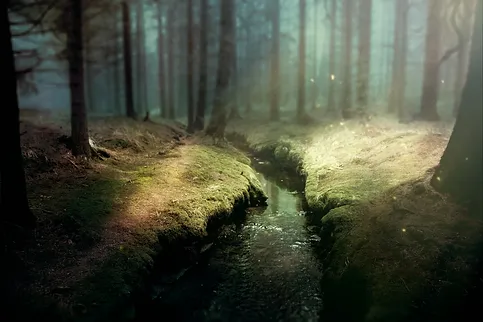
Scottish rain gives locks an atmosphere of resistance. Damp gets into iron, wool traps mist, and a gate that should open can grind shut; weather reinforces physical obstruction. This is noir with the volume turned up: the landscape withholds. A key stiffened by damp becomes fragile, making choices dependent on place and timing rather than abstract moral certainty.
Australian weather creates other versions. Salt-laden wind on the Tasmanian coast, a Melbourne downpour or heat swelling a metal gate can each interrupt a planned entry. These details do more than localise the scene. They turn the threshold into a test of persistence and remind us that the natural world can align with secrecy, isolation or accident without becoming a supernatural explanation.
Highland space and moral enclosure
The Highlands intensify enclosure because distance and difficult travel magnify every barrier. A locked gate may stand between a visitor and an estate, a village and its secrets, even a detective and the nearest telephone. The Scottish Highlands overview explores the landscape's pull for fantasy settings; Tartan Noir keeps remoteness but strips away easy wonder, asking who benefits from a road that stays closed.
That spatial logic exposes class instincts. An ancestral house may possess many keys and few witnesses, while a servant or outsider knows one hidden route. Power appears less as strength than as the ability to choose the locked version of events. For Australian readers familiar with old mining settlements, remote stations and coastal weather, the truth is legible: a closed door can protect privacy, conceal violence or preserve a community's myth of itself.
When a key changes hands
By the end of a Tartan Noir story, a key is rarely just a solution. It may be evidence, inherited burden, accidental intrusion or proof that someone crossed a boundary they claimed to respect. A lock can signify safety, guilt or a preserved public story. The object gains meaning through repeated use: seen, handled, withheld, copied or turned, it records relationships more accurately than a confession.
The strongest writers make that action structural. A door first encountered as an obstacle can later become an exit; a key trusted in one scene can become evidence in another. Symbolism develops through movement rather than a fixed code. In a form built for economical revelation, the click of a mechanism can carry a history of secrecy, and its final opening can expose more than the room it admits a character into.