
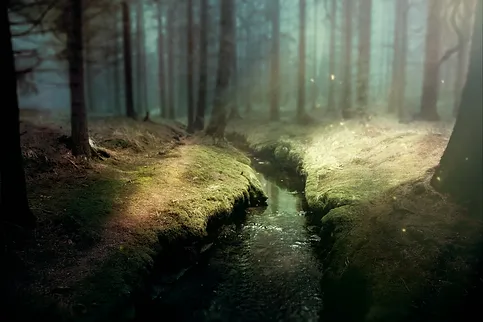



The Highlands As A Dark Engine For Tartan Noir
Why Tartan Noir Loves the Scottish Highlands and How to Use Them is really a question about pressure. The landscape is beautiful, but beauty in crime fiction can sharpen unease: a bright loch exposes a body, a spotless snowfield preserves footprints, and a single road turns escape into a gamble.
For Australian readers, the Highlands may feel distant, yet their emotional geography is familiar. Think of the long drive between regional towns, a Tasmanian road disappearing into wet forest, or bushfire smoke changing a known landscape into something threatening. Distance, weather and silence carry dramatic weight in both countries.
Tartan Noir works best when place has agency. The setting should obstruct, conceal, remember and occasionally mislead. Used carefully, the Scottish mountains become more than scenery behind a murder mystery; they become a force that tests loyalty, identity and the stories a community tells about itself.
Let The Landscape Create Pressure
A Highland setting gives a crime story natural boundaries. Mountains hem characters in, sea lochs divide communities, and a single bridge can become the only route to safety. A detective may know that help is forty minutes away, but a fallen tree, flooded track or sudden fog can turn that estimate into fiction.
Use geography to make every movement meaningful. A character crossing a moor should have a reason to risk exposure. Someone travelling from Inverness to a remote estate has time to reconsider a confession, while a witness on a ferry may realise that the person beside them knows far too much.
The landscape can also expose class. A renovated lodge, an abandoned croft and a council flat may sit within a few kilometres, yet represent entirely different versions of Highland life. Crime emerges from those unequal relationships rather than from scenery alone.
Make Isolation Social, Not Merely Physical
Remote communities are rarely empty. They are dense with memory, grudges and observation. The local mechanic knows whose van was parked near the burn. The publican remembers who ordered whisky before sunrise. A nurse recognises a family surname and chooses not to mention it.
That intimacy creates a useful contradiction: characters can struggle to keep secrets while remaining emotionally unreachable. A suspect might be surrounded by neighbours but have no one they trust. In a small village, gossip can travel faster than a police investigation, yet the most damaging truth may remain protected by shared history.
Australian readers will recognise this rhythm in regional towns outside Ballarat, on the outskirts of Hobart, or along the Queensland coast, where everyone appears to know everyone and privacy is negotiated rather than guaranteed. The local “arvo” gathering or footy club fundraiser can carry as much investigative information as a formal interview.
Turn Weather Into Evidence
Weather should alter the plot, not decorate it. Rain can wash away tyre marks, snow can preserve a trail, and wind can make a voice impossible to identify. A freezing night may explain why a killer takes an unexpected risk, while a clear morning reveals something hidden in darkness.
The Highlands offer shifting light, sudden squalls and long seasonal variations. Build a timeline around those changes. If the sun does not set until late, a witness’s account of darkness becomes suspect. If mist arrives at the precise hour of an assault, the question is whether it was natural, expected or deliberately exploited.
There is a strong Australian parallel in the way bushfire smoke turns distance hazy across Melbourne or makes a familiar Blue Mountains road feel strange. The principle is the same: atmospheric conditions should interfere with knowledge. When characters cannot see clearly, they must rely on judgement, trust and incomplete evidence.
Use Local Speech With Restraint
Dialogue gives Tartan Noir its regional grain, but exaggerated dialect can quickly become costume. Let vocabulary reveal relationships instead. A character who says “wee” naturally may sound affectionate, dismissive or threatening depending on context. Formal speech can signal distance, while a clipped reply may indicate years of resentment.
Avoid making every Highland character cryptic or grim. Add humour, irritation, practical kindness and plain talk. A crofter, police officer, hotel owner and visiting property developer should not share one polished voice. Their differences can expose education, employment, age and allegiance.
Australian writers can learn from the same restraint when using “mate”, “reckon” or “no worries”. Those expressions change meaning with tone and timing. A friendly “mate” at a servo can become a warning in a police interview, while “no worries” may conceal considerable worry.
Build Crime Around History
A compelling Highland mystery often reaches backwards. Land clearances, inherited estates, disappearing industries, family feuds and contested development can shape present-day crimes without turning the story into a history lecture. The past should survive through property, names, objects and silence.
Give the central crime a modern trigger. A wind farm proposal, a luxury retreat, a disputed inheritance or the return of an estranged child can disturb an old arrangement. Then ask who benefits from preserving the official version of events and who has been forced to live with its consequences.
This approach suits short fiction because one object can carry several layers: a key from a demolished cottage, a photograph with one face scratched out, or a ledger hidden beneath a floorboard. In a compact story, such details can connect landscape, family and motive without extensive exposition.
A Working Toolkit For Writers
Before drafting, choose a setting detail that creates friction rather than atmosphere alone. A remote road matters because someone is stranded on it; a loch matters because evidence may be beneath it; a ruined croft matters because two people remember its destruction differently.
Useful choices include:
- A bridge that closes after heavy rain
- A village shop where rumours become currency
- A mountain track known only to locals
- A holiday lodge masking an older community dispute
Give each major character a different relationship with the same place. One may regard the moor as freedom, another as inherited loss, and a third as a business opportunity. Those competing meanings create conflict before the crime is fully understood.
For a short story, select one pressure point and let it recur:
- Weather that contradicts a witness
- A local name nobody will explain
- A boundary marker moved overnight
- A road that changes the timing of the crime
Let The Story Travel Beyond Scotland
Tartan Noir travels well because its core concerns are portable: belonging, secrecy, land, power and the cost of being known. An Australian writer does not need to imitate Scottish phrasing or transplant a familiar plot. The useful task is to understand how a place governs behaviour, then apply that thinking to a local landscape.
A story set near Hobart might use ferry schedules, steep roads and competing ideas about wilderness. One set in a Western Australian mining town could explore transient workforces and permanent grudges. A Melbourne crime story might move from laneways to outer-suburban paddocks, showing how anonymity and surveillance coexist.
Readers can explore how short speculative and crime fiction handles atmosphere in the Issue 3 digital magazine, while writers interested in tangled motives and interwoven viewpoints may find the Tangled Web fiction collection especially relevant. These forms reward precise settings and economical clues.
The strongest Highland crime stories leave the reader unsure whether the land has revealed the truth or merely rearranged the evidence. That uncertainty is the heart of the form: a remote landscape where every road leads somewhere, but no arrival guarantees safety.