



Using Scottish Folklore to Enrich Tartan Noir Plots
Tartan Noir thrives on moral ambiguity, harsh landscapes, old grievances, and crimes that refuse to stay buried. Scottish folklore gives these stories an additional layer of pressure: a community may interpret a disappearance through the legend of a water horse, while an investigator sees only evidence, motive, and opportunity.
The strongest use of folklore does not turn a crime novel into a catalogue of monsters. It places traditional beliefs inside recognisable lives, allowing superstition to influence witnesses, suspects, families, and institutions. A ruined croft, a sea loch, or a remote glen can then carry emotional meaning as well as atmosphere.
Using Scottish Folklore to Enrich Tartan Noir Plots means treating myth as a living force within the narrative. Whether the supernatural is real, misunderstood, or deliberately invented, it can expose buried guilt and make a familiar investigation feel uncannily strange.
Let Legend Create Pressure
Folklore works particularly well when it changes what characters believe is possible. A police officer investigating a death might dismiss talk of the bean-nighe, the washerwoman said to foretell death, while an elderly witness considers the legend a warning that should have been heeded. Their disagreement creates tension before the killer is identified.
A legend can also serve as a criminal’s disguise. Someone might stage evidence beside a stream to suggest the presence of a supernatural omen, exploiting local fears to redirect suspicion. The story becomes more compelling when readers gradually discover that the folklore has been weaponised by a person who understands the community better than the investigators do.
Writers exploring this approach can draw useful distinctions between cultural inheritance and invented superstition. Myth and legend can shape a modern story without dictating its entire plot, especially when the writer allows characters to disagree about what a tradition means.
Make the Landscape Complicit
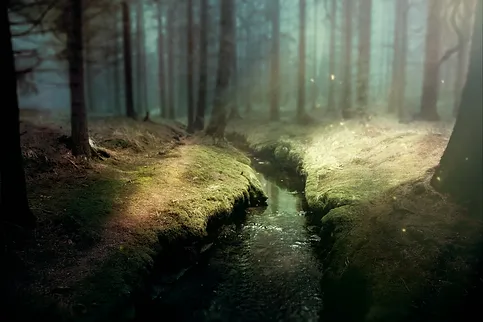
Scottish settings are often treated as dramatic backdrops, but folklore can make place an active presence. A loch associated with a kelpie may become the site of a fatal accident, a disputed development project, or a teenager’s disappearance. The legend influences how locals describe the water, how visitors behave near it, and how investigators interpret an apparently impossible death.
Specific geography gives a noir plot stronger roots. A story set on an island should consider ferry timetables, weather delays, seasonal work, and the intimacy of communities where everyone knows a family history. A glen can conceal a body, but it can also conceal a long-standing dispute over land, inheritance, fishing rights, or access to a sacred site.
The landscape becomes most effective when its beauty conflicts with its danger. A bright morning on a remote beach may reveal evidence that darkness concealed. A familiar footpath may connect a respectable household to an illicit meeting place. Folklore intensifies these contrasts by giving the terrain a memory that characters cannot easily escape.
Use the Supernatural Without Losing the Crime
A Tartan Noir story can remain grounded while using supernatural uncertainty. The Cù Sìth, a spectral hound associated with the Highlands, might appear in a witness’s account, a local ballad, or a threatening message. The writer does not need to show a literal phantom. The legend may represent a killer’s nickname, a family’s private code, or a traumatic memory from childhood.
Alternatively, the supernatural can remain genuinely ambiguous. A character hears a dog on a hillside where no animal should be, then finds a clue connected to the victim. Rational explanations may exist, yet none fully remove the unease. This ambiguity suits crime fiction because evidence is always incomplete and certainty often arrives too late.
The key is to establish rules. If a water spirit can enter the plot, decide what people know about it, what signs supposedly accompany it, and why those beliefs matter now. A supernatural element feels earned when it affects choices, not when it appears only to decorate a climactic scene.
| Folkloric element | Noir function | Possible modern interpretation |
|---|---|---|
| Kelpie or each-uisge | Lures victims toward danger | A killer’s method, an unsafe construction site, or a predatory local figure |
| Bean-nighe | Signals impending death | A witness, death omen, or symbol of inherited trauma |
| Cù Sìth | Creates pursuit and dread | A threatening nickname, guard dog, or unreliable sighting |
| Second sight | Complicates testimony | Intuition, pattern recognition, or concealed knowledge |
| Fairy hill or ancient site | Raises conflict over land | Commercial development, archaeological theft, or community division |
Turn Inheritance Into Motive
Folklore often survives through families, songs, warnings, and repeated stories. That makes it valuable in plots about inheritance. A murder may be connected to a suppressed version of a local legend, with each generation protecting a different account of what happened.
An old tale can also conceal a practical crime. A family might claim that a house is cursed to prevent anyone examining its foundations. A community may describe a drowned person as taken by the loch rather than admit that an influential landowner caused the death. The folklore becomes a social shield, protecting power from scrutiny.
This approach gives writers a way to explore class, migration, religious identity, and the pressures facing rural communities. Ask who benefits when a legend is believed. Ask whose version has been preserved and whose testimony was dismissed. The answers can reveal a motive more complicated than greed or revenge.
A modern protagonist may feel divided between scepticism and loyalty. They might work in heritage tourism while privately resenting the way local traditions are commercialised. They might return from Glasgow or London and discover that a childhood story has been used to justify a present-day crime. Personal conflict then develops alongside the investigation.
Build Clues From Belief and Behaviour
Folkloric clues should be concrete enough to support a mystery. A symbol carved into a door, a bundle of rowan, a missing shoe, or a repeated reference to a particular loch can direct attention without explaining everything too soon. The clue should have at least two meanings: one rooted in tradition and another connected to the crime.
Avoid making every local character an expert. Real communities contain believers, sceptics, opportunists, newcomers, and people who know fragments of a tradition without knowing its origin. Their conflicting explanations can create red herrings while showing how folklore changes as it passes between generations.
Recommendations for shaping the plot:
- Choose one central legend and connect it to the victim’s history, rather than scattering unrelated creatures through the story.
- Research Gaelic terminology, regional variations, and the difference between folklore, contemporary tourism, and later literary invention.
- Give the supernatural belief consequences in daily life, such as altered routes, guarded family records, or mistrust of outsiders.
- Make the criminal act understandable without the legend, then use the legend to deepen its emotional and cultural meaning.
- Let the final explanation preserve some uncertainty if that strengthens the story’s atmosphere and themes.
Short fiction is especially suited to this method because a few precise details can suggest centuries of belief. A warning scratched into a windowsill may carry more weight than several pages of exposition. The writer’s task is to let readers feel the story beneath the story.
Give the Community a Voice
A folklore-rich crime plot becomes more convincing when its community has competing voices. The local historian may defend a legend, the detective may reject it, and a young resident may use it ironically online. A returning emigrant may remember the tale differently from those who stayed. These perspectives prevent the setting from becoming a single, simplified idea of Scotland.
Dialogue should reveal social position as well as information. A character who says “the water took him” may be expressing grief, fear, or deliberate evasion. Another who insists on a forensic explanation may still carry a private superstition. The most revealing beliefs are often shown through behaviour: refusing to cross a bridge after dark, leaving food near a boundary stone, or avoiding a name associated with misfortune.
Readers can find examples of varied contemporary short fiction in Issue 1 of Mirk, where atmosphere, voice, and speculative possibility demonstrate how compact stories can create expansive worlds. The same economy can help a noir writer suggest a whole folklore tradition through one exchange or recurring image.
Bring the Shadow Into the Story
Scottish folklore gives Tartan Noir writers a way to connect crime with memory, landscape, and communal identity. It can make a missing-person case feel ancient without removing it from the present, or turn a familiar murder investigation into a question about who controls the story of a place.
The best plots leave room for both explanations: the practical crime that evidence can uncover and the older fear that evidence cannot quite erase. Writers ready to explore that tension can submit work to Tangled Web Fiction, bringing a distinctive blend of mystery, atmosphere, and imagination to readers who value powerful short fiction.