
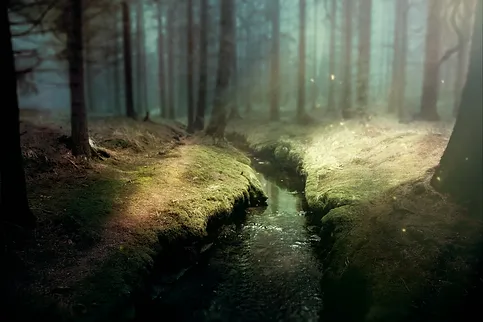



Scotland's brutal landscape as fuel for noir fiction
Tartan Noir has always treated the ground beneath a character's feet as something closer to a co-conspirator than a backdrop. The genre, named for the dark patterns woven into Scottish textile design, uses bog, basalt, slate, and sea fog to hem in its protagonists and choke off their exits. Writers who set stories across the hills, closes, and harbours of Scotland find that geography can supply motivation, mood, and physical danger in a single sentence. For readers in Sydney or Melbourne discovering the form, the appeal is partly the strangeness: a coastline that bites back, a city that hides its crimes under tenement smoke.
The Australian publishing market, while small, has long been receptive to European crime fiction in translation. Festivals in Adelaide and Brisbane routinely programme Scottish and Nordic authors alongside local writers, and bookshops in Carlton and Newtown stock Tartan Noir alongside homegrown coastal noir. Australian audiences recognise a kinship between their own vast, indifferent landscapes and the damp, brooding terrain of the Highlands.
Conflict in fiction does not always arrive with a weapon. It can be the rain that keeps a witness from running, the ferry that does not sail, the council estate whose stairwells swallow sound. Scotland offers writers a vocabulary of friction drawn from weather, rock, and isolation, and that vocabulary translates well to any reader who has waited alone at a Melbourne tram stop while the city cycles through four seasons in an afternoon.
Weather as antagonist
Scottish weather rarely behaves as a pleasant background detail. Mist descends without ceremony, turning a familiar lane into a corridor of grey. Rain arrives horizontally off the Firth of Forth and stays for a week. Snow seals mountain passes and leaves remote villages to their own devices. For a noir protagonist, this matters because it strips away the easy options. A character who cannot see the road, cannot trust the bridge, cannot rely on the next train to Glasgow has fewer routes to safety, and fewer places to hide a body or bury a lie.
Writers can lean into this atmospheric pressure by making the climate itself the source of a confrontation. Two enemies trapped in a bothy, a detective forced to shelter in a croft while the storm passes, a smuggler whose boat cannot leave Oban harbour until the swell drops. The setting pushes characters into the same small room, and small rooms breed suspicion, confession, and violence. A short piece such as this chilling story shows exactly how a single weather front can seal a character into a moment of reckoning.
City edges and tenement shadows
Glasgow and Edinburgh supply a denser, more human kind of geography. Their tenements stack lives on top of each other, so a fight in one flat echoes through three more. Closes too narrow for cars become natural traps for chases, ambushes, and overheard secrets. The Victorian stonework offers cover and menace in equal measure, and the social geography of schemes and suburbs layers class onto every transaction. A flat in Maryhill, a drink in a Leith pub, a debt owed in Possilpark: each location carries its own weight.
This urban texture rewards writers who treat place as character, the same principle that distinguishes a sharp piece of noir from a generic crime yarn. Australian readers familiar with the laneways of Perth or the public housing blocks of western Sydney will recognise the way architecture can shape destiny, though the stone and the accents differ. Both traditions understand that poverty is not a backdrop; it is a pressure system.
Coastlines and the pull of the sea
Scotland has more than eighteen thousand kilometres of it, and almost every stretch is willing to betray a character. Harbours freeze, ferries cancel, smugglers' coves lie empty when the coastguard passes. A protagonist trying to flee by boat must contend with tides, fog, and the long arm of the coastguard service. Even a quiet fishing pier becomes a stage for uneasy meetings, because everyone on a small pier sees everyone else.
This maritime tension offers something Australian writers of outback noir can borrow in reverse. The bush provides silence; the sea provides noise that never stops. A reader who grew up near the cray boats of Geraldton or the fishing fleets of Tasmania can map that sensory assault onto a Hebridean loch with little effort.
| Scottish setting | Source of conflict | Comparable Australian terrain |
|---|---|---|
| Highland glen | Isolation, weather, limited transport | Outback stations, Kimberley ranges |
| Glasgow tenement | Class tension, cramped space, overheard plots | Western Sydney estates, Footscray flats |
| Edinburgh Old Town closes | History, tourism pressure, stone shadows | Rocks laneways, Fremantle heritage precinct |
| Island ferry route | Weather, surveillance, dependence on others | Bass Strait crossings, Torres Strait islands |
| Borders farmstead | Cross-border deals, rural policing gaps | State border towns, remote pastoral leases |
Highlands and the limits of escape
The Highlands offer a different kind of pressure. Roads thin to single track, mobile signals vanish, and a wrong turn can put a driver behind a deer fence for hours. A character trying to disappear into the hills finds that the hills are no longer empty: deer stalking, grouse moors, and wind farms dot the map. There is almost no true wilderness left in Scotland, which means a fugitive is never truly alone, only watched by different eyes.
This surveillance of the landscape gives writers a way to make solitude itself the source of fear. The protagonist hears a quad bike on the ridge, a plane circling the glen, a ranger checking a gate. Privacy becomes impossible, and impossible privacy is the engine of much great noir. A reader who has driven through the red centre after dark will recognise the same dread, although the dust and the stars differ from the heather and the mist.
Voice shaped by place
Place without voice is a postcard. Tartan Noir depends on cadence, slang, and the music of the Scots tongue, even when the text is written in standard English. Dialogue earns its roughness from the streets and pubs that produced it. Writers chasing that effect should study how to develop a unique narrative voice for your protagonist basics, paying attention to rhythm, idiom, and what a character will not say as much as what they will.
When a writer matches voice to geography, the two become inseparable, and the conflict feels earned rather than imposed. A protagonist who speaks in clipped Glasgow sentences moves differently through a rainy close than one who murmurs in soft Border dialect across a Borders farm.
The Australian connection matters here too. The country's own slang, its dry humour, its habit of understatement, makes it a natural home for translated Tartan Noir. Authors in Brisbane, Perth, and Hobart are already remixing Scottish tropes with their own, proving that a good landscape of conflict is portable, as long as the writer respects the soil it came from.