
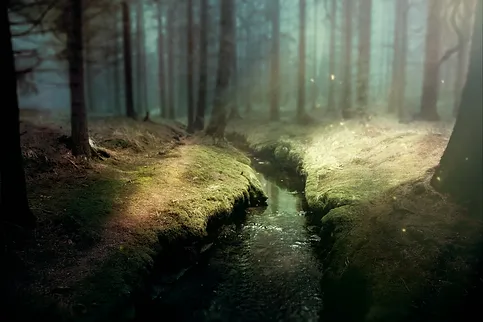



When the Wild Becomes the Story’s Greatest Threat
Nature is often treated as scenery in speculative fiction: a distant forest, an alien ocean, a ruined city reclaimed by vines. Yet the natural world can do far more than establish atmosphere. It can create pressure, divide communities, expose moral choices, and become an active force that shapes every decision a character makes.
Using nature as a source of conflict in speculative fiction allows writers to explore survival, power, belonging, and responsibility through vivid imagined environments. A flood, sentient woodland, poisoned atmosphere, or hostile planet can function as antagonist, judge, refuge, or unreliable witness.
The strongest stories make the environment feel inseparable from the plot. Characters do not simply move through a landscape; they depend on it, damage it, misunderstand it, or discover that its needs conflict with their own.
Make The Environment Act
A setting becomes dramatically powerful when it has consequences. A forest that closes its paths after sunset, a moon whose tides erase settlements, or a drought that reveals buried technology gives the landscape an active role in the narrative. The environment does not need human intelligence to create conflict. Physical laws, seasonal cycles, and ecological systems can be just as threatening.
Writers can increase tension by making natural processes difficult to predict. A river may change course overnight. A crop may develop a dependence on a rare mineral. A planet’s breathable air may become toxic during a particular phase of its orbit. These details turn background conditions into obstacles that characters must understand before they can overcome them.
Give Characters Conflicting Needs
Environmental conflict becomes meaningful when every solution carries a cost. One community may need to dam a river to survive, while another depends on its seasonal flooding. A mining colony may require a rare forest fungus for medicine, even though harvesting it could destroy an intelligent ecosystem. The central question is rarely whether nature is good or evil. It is who gets to decide what survival requires.
This tension also reveals character. A scientist might protect an endangered species at the expense of human settlements. A politician may promise technological control over the weather while concealing the damage caused by that intervention. A child raised in a flooded city may see adaptation as ordinary, while an outsider treats the same environment as a disaster.
Conflict rooted in competing needs avoids simplistic environmental messaging. It gives readers several positions they can understand, even when those positions cannot coexist.
Build Rules The Reader Can Feel
Speculative environments need internal logic. Readers will accept a world with carnivorous clouds or forests that remember spoken names if the story establishes how those elements behave. Clear rules make danger legible. They also allow characters to make informed choices, take calculated risks, and suffer consequences that feel earned.
The rules need not be explained in a block of exposition. Let readers learn them through action: a traveller marks safe stones before crossing a marsh, residents seal windows when the pollen turns silver, or an elder refuses to answer the mountain after dark. Such details make the setting feel lived in while allowing suspense to develop naturally.
| Natural Force | Possible Conflict | Character Choice |
|---|---|---|
| Rising sea levels | Families compete for high ground | Abandon a home or defend it |
| Sentient forest | Human expansion threatens its memory | Negotiate, retreat, or attack |
| Extreme weather | Authorities restrict movement and resources | Obey control or organize resistance |
| Alien ecosystem | Survival depends on an unknown species | Exploit, study, or protect it |
| Restored wilderness | Rewilding displaces existing communities | Accept loss or resist change |
Let Nature Challenge Human Certainty
Many stories become compelling when characters discover that their understanding of the natural world is incomplete. A supposedly barren planet may be communicating through magnetic storms. A plague may be the immune response of an ecosystem damaged by human settlement. A haunted moor may be responding to memories rather than spirits.
This kind of uncertainty works especially well with limited or biased perspectives. A narrator who insists that the landscape is hostile may be hiding their own destructive actions. Another narrator may interpret a natural intelligence through superstition, while a more rational explanation remains equally possible. Readers drawn to the unreliable narrator can use environmental ambiguity to make every observation feel unstable.
The key is to preserve emotional clarity even when factual certainty remains elusive. Readers may not know what the storm wants, but they should understand why the protagonist fears it, needs it, or feels responsible for its arrival.
Use The Landscape To Shape Culture
Nature creates conflict long before the plot begins. It determines where people build homes, what they eat, which journeys are possible, and what stories they tell about danger. A society living beneath permanent cloud cover may value artificial light as a sacred resource. Nomads crossing a toxic desert may treat water maps as family heirlooms. A coastal civilization could measure status through access to elevated ground.
These cultural details make environmental stakes personal. When a village is threatened by a volcanic eruption, the loss involves more than buildings. It may mean the destruction of burial sites, ancestral routes, seasonal rituals, or a language shaped by the terrain. Characters then face grief and displacement alongside immediate physical danger.
Writers exploring these relationships can find useful models in varied speculative voices. Stories about emerging voices often demonstrate how a distinctive setting can carry social history as well as atmosphere.
Turn Adaptation Into A Moral Choice
Survival stories often focus on escape, but adaptation can produce richer conflict. Characters may alter their bodies, memories, technology, or social structures to live within a changed environment. The transformation may save lives while raising difficult questions about identity. If people can breathe underwater, are they still part of the old human community? If a city merges with a sentient root system, who owns its streets?
Adaptation can also be uneven. Wealthy citizens may purchase climate-controlled shelters while poorer communities develop dangerous but effective survival practices. A government may call forced relocation necessary, even though it protects commercial interests. A family may welcome genetic changes that allow their children to thrive while fearing the loss of familiar human traits.
The most memorable environmental conflicts do not end when the storm passes. They leave characters changed and societies reorganized. Nature becomes a force that exposes what a culture values and what it is willing to sacrifice.
Practical Ways To Deepen Environmental Conflict
A draft can gain intensity when the natural world affects plot, character, and theme at the same time. Consider these approaches:
- Give the environment a recurring pattern that characters gradually learn to interpret.
- Make every resource meaningful by connecting it to status, memory, health, or survival.
- Let different characters describe the same landscape in contradictory ways.
- Create a cost for both resisting nature and adapting to it.
- Show environmental consequences through ordinary routines, not only dramatic disasters.
Short fiction is especially suited to this method because a single image can imply an entire history: roots breaking through a courtroom floor, fish falling from a red sky, or a child carrying a jar of breathable air. In a tightly focused story, the setting can apply pressure from the first sentence and continue shaping the final choice.
Writers ready to place ecological tension, wild landscapes, and speculative ideas at the heart of a story can submit your story to Inspiring Fiction. Readers can discover free short fiction through the platform’s online magazines, while authors have an opportunity to bring fresh worlds and urgent conflicts into view. Let the landscape speak through action, consequence, and change—and give nature a role the plot cannot survive without.