


The Supernatural In Scottish Literary Imagination
Scottish literature has long treated the supernatural as a living presence rather than a decorative feature. Ghosts, fairies, witches, prophetic dreams, haunted landscapes, and uncanny doubles emerge from a culture shaped by oral storytelling, religious conviction, political upheaval, and a powerful sense of place.
In classic Scottish writing, the otherworldly often stands beside the ordinary. A farm worker may encounter a fairy host, a traveller may hear a ghostly warning, or a respectable gentleman may discover that the darkness he fears exists within himself. These encounters create suspense, yet they also express anxieties about history, identity, morality, and belonging.
The supernatural in classic Scottish literature therefore operates across several registers. It can preserve folk memory, challenge rational explanations, dramatise guilt, or expose the limits of human knowledge. Its influence continues in modern fantasy, gothic fiction, and Tartan Noir, where the bleak hills and crowded cities of Scotland remain fertile ground for strange and unsettling stories.
Folklore Beneath The Written Page
Before supernatural motifs appeared in novels and poems, they circulated through ballads, fireside tales, seasonal customs, and local legends. Stories of selkies, brownies, kelpies, witches, and fairy lovers carried knowledge about dangerous places and social boundaries. The supernatural gave communities a language for events that seemed inexplicable, while also preserving regional beliefs across generations.
Writers such as Robert Burns drew heavily on this inherited tradition. In “Tam o’ Shanter,” the drunken rider’s flight from witches and the grotesque spectacle at Alloway Kirk combine comedy with genuine terror. Burns makes folklore vivid through Scots dialect, rhythm, and precise local detail. The result feels rooted in a recognisable landscape, even when the scene becomes impossible.
This relationship between oral tradition and imaginative fiction remains visible in Scottish folklore’s influence on contemporary fantasy. Modern authors may reshape old creatures and legends, yet the underlying concerns—belonging, danger, transformation, and the cost of crossing thresholds—remain remarkably durable.
The Haunted Landscape
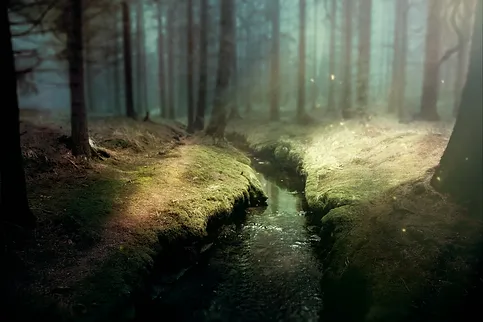
Scottish settings often behave like characters. Mist-covered lochs, ruined castles, lonely glens, and storm-lashed coastlines create an atmosphere in which supernatural events seem plausible. The landscape does not merely surround the action; it carries memory and suggests that the past has never fully disappeared.
Sir Walter Scott used this quality extensively. In novels such as The Antiquary, ruins and local legends connect personal experience with national history. His supernatural episodes frequently remain ambiguous. A ghost may be real, mistaken, or produced by fear, but the uncertainty itself matters. Scott’s readers are encouraged to inhabit a world where empirical explanations coexist with inherited belief.
James Hogg pushes this ambiguity further in The Private Memoirs and Confessions of a Justified Sinner. The novel’s demonic figure may be an actual tempter, a projection of psychological disturbance, or both at once. Hogg uses competing narratives to make certainty impossible, turning supernatural fiction into an investigation of unstable identity and religious obsession.
Religion, Guilt, And The Uncanny
Scottish Presbyterian culture gave supernatural literature a distinctive moral tension. Belief in providence, sin, temptation, and damnation made the invisible world intensely relevant. A ghost was rarely just a spectacle; it could represent unresolved guilt, divine judgment, or the consequences of violating a sacred order.
This moral dimension appears in many Scottish ghost stories, where the dead return because justice has been denied or a secret remains concealed. The haunting becomes a form of narrative pressure. Characters cannot simply move forward because the past continues to demand recognition.
Robert Louis Stevenson transformed this concern into modern psychological gothic. Strange Case of Dr Jekyll and Mr Hyde contains no traditional ghost, yet its supernatural transformation performs a similar function. Hyde embodies the hidden self that respectable society attempts to suppress. The novella relocates the haunted house into the human body and turns moral conflict into physical metamorphosis.
Forms Of The Supernatural In Classic Works
Different writers use uncanny material for different artistic purposes. The following comparison shows how folklore, gothic fiction, and supernatural ambiguity can produce distinct effects.
| Writer or work | Supernatural element | Central concern | Effect on the reader |
|---|---|---|---|
| Robert Burns, “Tam o’ Shanter” | Witches and a nocturnal pursuit | Folklore, temptation, and fear | Comic energy sharpened by real danger |
| Walter Scott, The Antiquary | Ghostly legends and mysterious events | History, memory, and belief | Uncertainty between explanation and haunting |
| James Hogg, The Private Memoirs and Confessions of a Justified Sinner | Demonic influence or psychological projection | Religious extremism and divided identity | Deep distrust of narrators and appearances |
| Robert Louis Stevenson, Jekyll and Hyde | Bodily transformation | Repression, morality, and urban anxiety | Horror generated by the familiar becoming monstrous |
| Scottish ballad tradition | Ghosts, revenants, and fairy encounters | Love, betrayal, death, and taboo | Emotional intensity through repetition and fatalism |
These works demonstrate that supernatural fiction does not require a single type of monster. The uncanny may be a creature from legend, a voice from the past, a religious terror, or an altered version of the self. Its flexibility explains why it has remained central to Scottish storytelling.
The City And The Divided Self
Although Scotland is often imagined through remote landscapes, classic supernatural writing also finds terror in the city. Edinburgh’s closes, graveyards, medical theatres, and sharply divided social worlds provide an ideal setting for gothic fiction. The city’s architecture reflects the split between public respectability and private disorder.
Stevenson’s London setting in Jekyll and Hyde extends this Scottish concern into a wider modern environment. Narrow streets, locked doors, laboratories, and respectable offices create a world governed by secrecy. Scientific progress does not banish the supernatural; instead, it gives transformation a new setting and vocabulary.
This shift from rural legend to urban uncanny is important for later Scottish crime and noir. The supernatural may become metaphorical, psychological, or barely visible, yet the atmosphere of suspicion survives. A crime story can inherit the structure of a ghost story when buried histories return to disturb the present.
Reading With A Writer’s Attention
For readers and emerging authors, classic Scottish supernatural fiction offers several practical lessons. Atmosphere works best when it grows from specific sensory detail, while ambiguity becomes persuasive when each possible explanation has emotional and logical weight.
A convincing uncanny story also needs consequences. A strange encounter should alter a relationship, expose a secret, or force a difficult choice. Writers developing speculative fiction can find useful guidance in shaping satisfying endings, especially when a story leaves supernatural events partly unexplained.
- Build the supernatural from a recognisable place, custom, or fear.
- Let folklore influence character choices rather than serving as decoration.
- Balance wonder with danger, uncertainty, or moral consequence.
- Use sensory language to make impossible events feel immediate.
- Leave room for interpretation without withholding emotional resolution.
A Tradition Still In Motion
The supernatural remains powerful in Scottish literature because it connects private experience with collective memory. A haunting can signify historical trauma, a monster can embody social repression, and a fairy tale can preserve values that official history overlooks. These meanings allow old forms to change without losing their emotional force.
Contemporary writers continue to revisit Scotland’s legends through fantasy, horror, crime, and speculative fiction. They may place ancient beings in housing estates, transform haunted castles into abandoned institutions, or use supernatural suspicion to examine class, migration, gender, and ecological loss. The old stories survive because each generation discovers a new reason to fear, desire, or question the unknown.
Readers seeking accessible short fiction can explore Inspiring Fiction’s magazines, where speculative, fantasy, and Tartan Noir stories extend this rich tradition in contemporary forms. Through new voices and imaginative retellings, Scotland’s supernatural imagination continues to cross the boundary between remembered folklore and urgent modern fiction.
Read the classics alongside today’s emerging storytellers, and discover how a ghost, a legend, or a divided self can still illuminate the realities of Scottish life.