


The Power of Symbolism in Tartan Noir
Tartan Noir draws its force from the uneasy meeting of crime fiction, psychological drama, and Scotland’s distinctive cultural landscape. Its stories often move through rain-darkened streets, remote glens, strained communities, and homes filled with old loyalties. Within these settings, objects and images can carry as much meaning as dialogue.
Symbolism gives a Tartan Noir story a second language. A ruined croft may suggest a family’s collapse; a loch may conceal guilt as effectively as it conceals a body. When recurring images are carefully chosen, they deepen the mystery, sharpen characterisation, and make the emotional consequences of crime linger after the final page.
Landscape As A Psychological Map
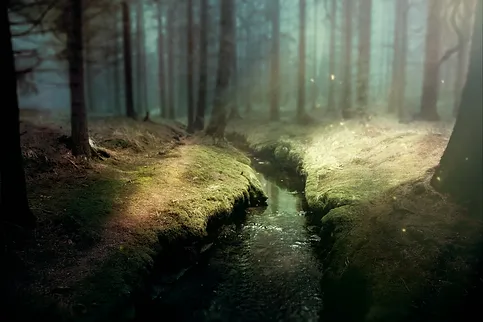
In Tartan Noir, landscape is rarely neutral. Mountains, islands, forests, and coastal roads can mirror a character’s inner condition, turning physical space into a psychological map. A bleak moor may reflect isolation, while a narrow village street can suggest the pressure of public scrutiny and inherited reputation.
Weather has a similar role. Persistent rain can wear down resistance, while sudden sunlight may expose rather than relieve tension. Fog obscures evidence and motives, but it can also represent a character’s refusal to see the truth. These details become most effective when they influence action instead of functioning as decorative scenery.
A detective who avoids a particular shoreline, for instance, may be revealing trauma before explaining it. The setting then becomes part of the investigation, offering clues through emotional association rather than straightforward evidence.
Objects That Carry Guilt
Small objects are powerful symbolic devices because they connect private memory with public crime. A cracked whisky glass, a bloodstained fishing lure, or an old photograph can represent a history that characters would rather bury. Such items create continuity between past and present, particularly when they reappear at moments of pressure.
A symbolic object should change meaning as the story develops. At first, a silver brooch might seem like an heirloom. Later, it could become evidence of betrayal, a reminder of class division, or proof that a supposedly reliable witness has lied. The object gains power through context and repetition.
This approach also supports economy. Instead of explaining a character’s shame in several paragraphs, a writer can show them hiding, polishing, or destroying an object linked to the event. The reader participates in interpreting the clue, which makes the emotional revelation more satisfying.
Bloodlines, Names, And Inheritance
Family history is a central concern in many Scottish crime narratives, making ancestry a natural source of symbolism. A surname can open doors, close ranks, or mark someone as an outsider. In a small community, a family name may carry allegations that have never reached a courtroom yet still shape every relationship.
Inheritance extends beyond property. Characters inherit grudges, silence, religious expectations, political loyalties, and patterns of violence. An old house can embody this burden through locked rooms, portraits, neglected furniture, or repairs that never quite disguise structural damage.
The most compelling stories complicate inherited identity. A protagonist may resist a family’s values while unconsciously repeating its behaviour. This tension is especially rich when writing female protagonists, whose relationship with authority, reputation, and social expectation can reveal how power operates beneath a close-knit community.
Symbolic Motifs In Practice
A motif becomes meaningful through recurrence and variation. The same image can appear in different forms, allowing its significance to evolve as the investigation proceeds. A locked gate may first indicate exclusion, later protection, and finally complicity.
| Symbolic Motif | Surface Meaning | Deeper Possibility | Best Used For |
|---|---|---|---|
| Rain | Bad weather | Emotional exhaustion or cleansing | Sustaining unease |
| A ruined house | Neglect | Family collapse or buried history | Revealing inheritance |
| The sea | Escape or danger | Memory, fate, or moral uncertainty | Expanding psychological scale |
| A tartan garment | Heritage | Belonging, performance, or conflict | Exploring identity |
| A missing key | A practical clue | Control, secrecy, or access to truth | Driving investigation |
Writers should avoid assigning one fixed meaning to every image. Symbolism works best when it remains slightly unstable. The sea might promise freedom to one character and represent death to another. This contrast creates interpretive tension while keeping the story grounded in character.
Atmosphere and symbolism should also reinforce each other. A decaying harbour, a dim kitchen, or an empty railway platform can establish emotional expectations before the plot reveals why they matter. A useful exploration of Gothic atmosphere shows how mood can make setting feel active, watchful, and psychologically charged.
Cultural Detail Without Cliché
Tartan Noir depends on a strong sense of place, but cultural detail must feel specific rather than ornamental. Local speech, food, music, work, architecture, and social rituals can provide authentic symbolic material when they arise naturally from the characters’ lives.
Tartan itself, for example, need not simply signify Scottish identity. It might represent a carefully maintained public image, a contested clan connection, or a commercial version of heritage that clashes with lived experience. Similarly, a ceilidh could function as a celebration, a stage for social performance, or a setting where old resentments become visible.
The key is precision. A writer should observe how a community uses symbols rather than assuming what those symbols mean. This allows the story to explore class, migration, gender, religion, and regional identity without reducing Scotland to mist, castles, and ancestral secrets.
Humour Beside The Darkness
Dark crime fiction benefits from tonal contrast. Dry wit, awkward banter, and absurd social behaviour can make a threatening world feel more believable because real people rarely respond to fear in a single emotional register. Humour may also expose hypocrisy more sharply than solemn accusation.
A police officer making a bleak joke in a hospital corridor is not necessarily weakening the scene. The joke may reveal exhaustion, emotional self-defence, or a refusal to surrender control. Used carefully, comic details can make later violence feel more shocking because they establish ordinary human rhythms first.
The balance matters. Humour should emerge from character and circumstance, not interrupt tension at random. Writers exploring dark humor can use comic friction to illuminate moral discomfort, especially when characters laugh at the very customs or institutions that protect them.
Building Symbols That Resonate
Strong symbolism begins with character rather than a catalogue of attractive images. Decide what a person fears, protects, misunderstands, or cannot release. Then choose physical details that express those pressures indirectly.
Useful principles include:
- Give each major symbol a connection to a character’s history.
- Repeat important images with altered emotional meaning.
- Let setting create consequences instead of serving as background.
- Use cultural details through lived behaviour and specific observation.
- Leave some interpretations open so readers can discover significance themselves.
The most memorable motifs also interact with the plot. A river should complicate a decision, a family relic should alter an investigation, and a weather pattern should affect what characters can do. When symbolism changes the choices available to the cast, it becomes part of the story’s structure rather than an added layer of decoration.
Tartan Noir gains much of its distinctive power from this fusion of image, place, and moral uncertainty. A single object can connect generations; a landscape can expose a secret; a joke can reveal fear. For readers, these patterns reward close attention. For writers, they offer a way to make short fiction feel expansive without sacrificing momentum.
Explore the stories and writing resources at Inspiring Fiction, then bring your own charged objects, haunted landscapes, and unresolved histories to the page. Submit a story when it is ready and join a community dedicated to giving powerful speculative and noir fiction a wider audience.