


Celtic Mythology And The Shape Of Modern Fantasy
Celtic mythology continues to shape fantasy through its mysterious landscapes, morally complex heroes, and intimate relationship between the human world and the supernatural. Its influence appears in epic novels, dark fairy tales, role-playing games, films, and short fiction, often transformed rather than copied from ancient sources.
The traditions associated with Ireland, Scotland, Wales, Cornwall, and Brittany are diverse. They include heroic cycles, sacred wells, enchanted islands, shape-shifters, prophetic women, giant builders, and gods who exist just beyond ordinary perception. Treating these traditions as a single mythology can flatten their differences, but their shared atmosphere remains powerful: the visible world is never the whole story.
For contemporary writers, Celtic material offers more than a collection of creatures and names. It provides a way to explore memory, inheritance, land, exile, duty, and the dangerous bargains made between the living and the Otherworld.
The Otherworld Beyond The Familiar
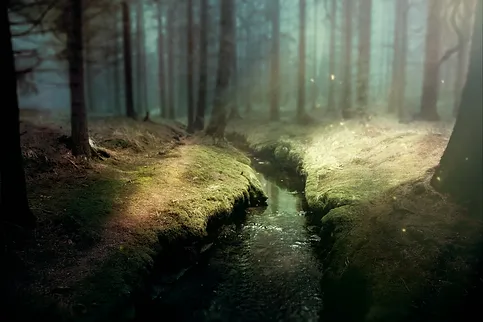
One of the strongest Celtic motifs is the existence of a parallel realm that overlaps with everyday life. In Irish tradition, the Otherworld may be reached through burial mounds, mist, lakes, caves, or moments when ordinary time breaks apart. In Welsh stories, Annwn carries related associations with mystery, enchantment, and altered reality.
Modern fantasy frequently uses this structure. A protagonist crosses a forest, steps through a standing stone, or follows music into an unfamiliar landscape, only to discover that the supernatural realm has its own laws. The journey is rarely a simple escape. Time may move differently, promises may become binding, and returning home may carry a significant cost.
This model has influenced portal fantasy and urban fantasy alike. It allows writers to place wonder beside danger, creating worlds where a suburban street, remote island, or ruined castle can become a threshold. The most effective stories preserve that uncertainty instead of explaining every supernatural detail.
Heroes Bound By Oaths And Fate
Celtic heroic literature often presents courage as inseparable from obligation. Cú Chulainn’s greatness is linked to his fierce loyalty, extraordinary martial ability, and tragic vulnerability. Fionn mac Cumhaill appears in a different narrative tradition as a leader whose wisdom, identity, and relationship with the natural world evolve through repeated trials.
A recurring device is the geis, an injunction or taboo that binds a person to particular behavior. Such a condition can grant power while placing the hero in an impossible position. Contemporary fantasy has adopted similar ideas through magical contracts, blood oaths, inherited curses, and rules that transform personal choices into matters of destiny.
These motifs help create character-driven conflict. A hero does not simply fight a monster; the hero must decide which promise to keep when every option carries consequences. That tension can make a short story feel expansive. Writers exploring this approach may find useful guidance in writing memorable fiction, especially when a mythic premise needs to remain emotionally grounded.
Women Of Power And Transformation
Celtic myth includes many female figures whose roles resist the passive enchantress stereotype. The Morrígan is associated with sovereignty, battle, prophecy, and transformation, while figures such as Brigid connect creativity, healing, and sacred authority. In Welsh tradition, Rhiannon combines dignity, endurance, and otherworldly presence.
Contemporary fantasy has revisited these figures to examine power from perspectives that older retellings sometimes marginalize. A queen may represent the land itself, a prophet may shape events rather than merely predict them, and a shapeshifter may use transformation as survival rather than spectacle.
| Mythic element | Contemporary fantasy use | Central tension |
|---|---|---|
| The Otherworld | Parallel realms and hidden magical societies | Wonder versus belonging |
| Geasa and sacred vows | Curses, contracts, and binding promises | Freedom versus duty |
| Sovereignty figures | Rulers linked to land and legitimacy | Power versus responsibility |
| Shape-shifting | Identity changes and bodily transformation | Selfhood versus adaptation |
| Enchanted landscapes | Sentient forests, islands, and wells | Possession versus stewardship |
The strongest adaptations give these characters agency without reducing them to symbols. A modern fantasy story can draw on sovereignty, prophecy, or transformation while allowing its characters to possess private motives, contradictions, and unexpected forms of resistance.
Landscapes That Remember
Celtic storytelling often treats landscape as active rather than decorative. Hills, rivers, trees, stones, and shorelines may preserve ancient events or serve as meeting points between generations. A place can be sacred, dangerous, politically contested, or emotionally inseparable from a family’s identity.
This idea has clear value for speculative fiction. A forest might respond to violence committed within it. A coastal village may depend on an old agreement with beings beneath the sea. A ruined fort could hold a memory that changes whenever someone tells the story. These settings create atmosphere while also advancing the plot.
Such landscape-based fantasy differs from generic medieval scenery because place has moral weight. Land can be wounded, defended, betrayed, or reclaimed. This approach also suits Tartan Noir and darker short fiction, where weather, terrain, and local history can intensify suspicion and reveal buried wrongdoing.
Adapting Myth Without Losing Its Spirit
Borrowing from Celtic folklore requires care. The traditions developed across distinct cultures and historical periods, often surviving through oral transmission before being recorded by Christian-era scribes. A writer should therefore distinguish Irish heroic cycles from Welsh medieval literature and avoid presenting every Celtic symbol as interchangeable.
Research is important, but respectful adaptation does not require reproducing an old tale scene by scene. A writer might preserve the original story’s central pressure—an oath, a contested inheritance, a dangerous feast, or a journey into faerie—while changing the setting and character relationships.
- Identify the specific tradition behind the motif.
- Study the original conflict before altering its surface details.
- Give supernatural beings motives beyond simple good and evil.
- Let cultural references serve character and plot rather than decoration.
- Consider whose voice is missing from the inherited version.
Fantasy submissions can lose strength when familiar mythology replaces fresh storytelling. Before sending work to a literary publication, writers can review these common submission mistakes and check that the story offers more than recognizable names or atmospheric scenery.
Short Fiction And The Mythic Spark
Short stories are especially well suited to Celtic-inspired fantasy because myth often works through implication. A single encounter at a crossroads can suggest an entire cosmology. A family’s silence may reveal an old pact. One impossible object—a speaking raven, a silver branch, or a key that opens no human door—can imply generations of history without lengthy exposition.
The form also encourages compression and ambiguity. Rather than explaining the full origin of a fairy court, a writer can show its effect on one village. Rather than recounting an ancient battle, the story can follow someone who inherits its unfinished consequences. This creates room for readers to imagine what lies beyond the page.
Contemporary fantasy thrives when it treats mythology as a living source of questions. Who owns a story? What does a community owe its ancestors? Can a promise made by the dead bind the living? Platforms such as Inspiring Fiction give readers access to new speculative work while offering writers a place to develop distinctive answers.
Writers inspired by Celtic traditions can begin with one landscape, one obligation, or one impossible choice, then build outward through character and consequence. Readers can seek out short fiction that approaches folklore with imagination and care. Submitting, reading, and sharing such stories helps keep mythic storytelling active in the present rather than preserved only as a relic of the past.