


Exile In Scottish Speculative Fiction
Exile is one of the most persistent emotional landscapes in Scottish literature. It can mean forced migration, economic displacement, political banishment or the quieter estrangement of feeling foreign in one’s own village. In speculative fiction, these experiences become vivid through invented islands, altered histories, haunted borders and futures shaped by climate or conflict.
For Australian readers, the theme carries particular resonance. A story about leaving the Hebrides may speak to anyone who has moved from Perth to Melbourne, watched a family scatter across Sydney and regional New South Wales, or inherited memories of a country left behind. Scottish speculative fiction turns distance into a narrative engine, asking what survives when home becomes unreachable.
The Historical Weight Of Leaving
Scottish exile is inseparable from history. The Highland Clearances, religious conflict, military service and industrial migration all created communities divided between those who remained and those who departed. Speculative writers can revisit these histories without being confined to documentary realism, giving a ghost, an alternate monarch or a future technology the task of revealing old wounds.
The result is often a layered sense of time. A character may stand in a recognisable crofting landscape while hearing voices from ancestors who were evicted generations earlier. This approach makes exile feel inherited rather than strictly personal: a family carries its absences, and a nation carries the memory of people removed from its map.
Islands, Borders And Unstable Homes
Scottish islands frequently function as more than atmospheric settings. Their physical separation creates a natural laboratory for stories about belonging. A ferry that fails to arrive, a village hidden by fog or an island that appears only at certain tides can transform geography into a moral test.
Borders in these stories are rarely fixed. The boundary may divide the living from the dead, the human from the uncanny or an old Scotland from a speculative future. A protagonist crossing such a threshold may gain freedom, yet the crossing can also involve cultural loss. Home becomes a shifting idea rather than a location that can be recovered intact.
Landscape As A Memory Keeper
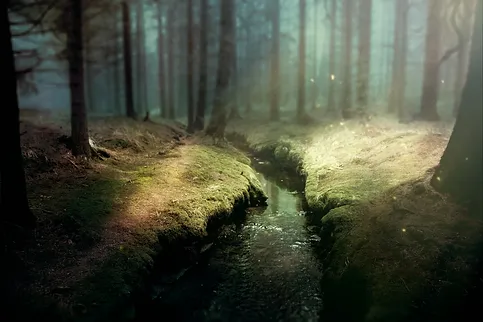
Moors, lochs, glens and storm-battered coastlines often hold the emotional history of Scottish speculative fiction. Landscape remembers what official records omit: an abandoned school, a ruined settlement or a path once used by families forced towards the coast. The supernatural makes this memory visible through apparitions, speaking weather and places that resist development.
Readers in Australia may recognise the power of terrain to shape identity. The distance between a Melbourne suburb and the Victorian high country, or between Sydney and the western plains, can carry its own forms of cultural dislocation. The third digital issue offers a useful setting for discovering how contemporary short fiction can make place feel active, intimate and strange.
Diaspora And The Double Consciousness
Exile does not end when a character reaches a new country. It often produces a double consciousness: the newcomer learns the customs of a new society while comparing them with remembered rituals, speech and family stories. In fiction, this tension may appear through code-switching, dreams in an ancestral dialect or a conflict between inherited duty and personal reinvention.
This is especially relevant in Australia, where Scottish migration is part of a broader colonial and diasporic history. A character attending a Highland games event in regional Victoria, observing Burns Night in Sydney or finding an old tartan in a Brisbane wardrobe may feel connected to Scotland without possessing a simple claim to it. Speculative fiction can examine that uncertainty honestly, including the gaps, silences and privileges within inherited identity.
Exile Beyond National Identity
The theme also reaches beyond migration and nationality. Characters may be exiled from gender expectations, class structures, religious communities or a version of themselves that no longer fits. Tartan Noir adds another dimension by placing alienation inside crime narratives, where a suspect or investigator can be trapped by social reputation long before the law intervenes.
Fantasy and science fiction widen the possibilities further. A person might be expelled from a magical order, uploaded into an unfamiliar body or sent to a planet whose atmosphere changes memory. These premises externalise psychological estrangement. The imagined world becomes a clear metaphor for loneliness, while still retaining the suspense and wonder expected of speculative storytelling.
Motifs That Reward Close Reading
The strongest stories often repeat small objects or habits until they become symbols. A key, a train ticket or a family recipe can carry more emotional weight than an explanation of political history. Readers can watch for details that connect an individual departure with a larger communal rupture.
Useful motifs include:
- Maps that contradict the characters’ memories
- Doors, ferries and bridges that refuse ordinary passage
- Names altered by translation, marriage or official records
- Weather that behaves like an ancestral presence
Exile is also expressed through sound and social ritual. Silence at a dinner table, a song remembered incorrectly or a formal greeting used at the wrong moment can show that a character is out of place without direct exposition.
Other details worth noticing are:
- Regional language set against standard English
- Food prepared as an act of remembrance
- Public ceremonies that exclude private grief
- Technology that preserves facts but loses feeling
For an Australian audience, these details can evoke the tension between public multicultural celebration and the private complexity of family history. A story may acknowledge heritage through a festival or costume while questioning whether performance alone can restore a displaced culture.
Reading Exile In The Contemporary Market
Short fiction is particularly suited to exile because its compressed form resembles a fragment of memory. A story can begin after the departure, offer only traces of the lost home and end before the character knows whether return is possible. That openness invites readers to participate in reconstructing the past.
Digital publication also matters to the theme’s readership. A free online magazine can reach Australian readers outside the main literary centres, including those in Adelaide, Hobart or remote communities who may not encounter every print title stocked in major bookshops. Platforms such as Inspiring Fiction connect emerging writers with audiences interested in fantasy, speculative fiction and crime without making access depend entirely on the commercial market. Its first Mirk issue is one place to explore that relationship between accessible publishing and imaginative storytelling.
| Form of exile | Common speculative device | Central emotional question |
|---|---|---|
| Forced migration | Altered history or ancestral haunting | What has been erased from the official story? |
| Cultural estrangement | Lost language or divided identity | Can belonging survive without complete memory? |
| Social banishment | Crime, curse or village taboo | Who decides that someone no longer belongs? |
| Futuristic displacement | Space travel, climate change or virtual worlds | What makes a home real when the environment changes? |
The most compelling Scottish speculative fiction does not treat exile as a decorative mood. It examines power: who is moved, who is permitted to return and who gets to define the meaning of home. For readers in Australia, that focus can open productive conversations about migration, inherited histories and the stories landscapes continue to hold.