


Exploring Crime And Magic In Tartan Noir
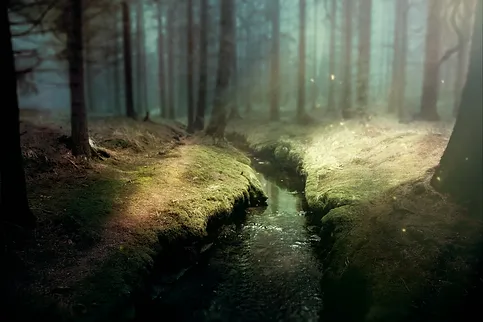
Tartan Noir has always drawn power from the uneasy relationship between people and place. Its crimes emerge from remote glens, crowded tenements, rain-darkened streets, island communities, and cities shaped by old loyalties. When magic enters that landscape, it does not need to transform Scotland into a realm of dragons and grand quests. A whispered curse, a family superstition, or a place that seems to remember violence can be enough.
The result is a rich form of speculative crime fiction. Investigators still follow evidence, suspects still conceal motives, and victims still suffer the consequences of human decisions. Yet the world contains an uncertainty that ordinary detective stories often avoid: perhaps the impossible is real, or perhaps belief has become powerful enough to imitate it.
This meeting of folklore, mystery, and psychological darkness gives writers fresh ways to explore guilt, inheritance, justice, and belonging. It also gives readers a crime story in which the landscape itself may be watching.
Place As Evidence
In Tartan Noir, geography is rarely decorative. A neglected harbour, an isolated croft, or a housing scheme divided by old rivalries can determine who feels safe, who is believed, and who can disappear unnoticed. The setting creates practical conditions for crime while revealing the social history behind it.
Magic deepens this function. A loch associated with disappearances may become the centre of a modern investigation. A ruined kirk might carry stories of forbidden rituals, while a family home seems to preserve the emotional imprint of its former occupants. The supernatural element works best when it grows from local memory rather than being imposed as an unrelated spectacle.
Writers exploring this relationship can draw on the sense of place that makes Tartan Noir so distinctive. The closer the setting is tied to community, history, and class, the more convincingly it can influence the crime.
Folklore With A Criminal Edge
Scottish folklore offers an extensive vocabulary for stories about fear and wrongdoing. Second sight, changelings, selkies, witch trials, fairy roads, ghostly warnings, and protective charms can all become part of a noir plot. Their purpose is not simply to create atmosphere. Each belief can expose a character’s desires or provide cover for a calculated crime.
A murderer might exploit a village legend to make a death appear supernatural. A grieving family might interpret a genuine accident as a curse because that explanation is easier to bear. Alternatively, a detective may dismiss every strange detail as coincidence, only to discover that rational certainty has become another form of blindness.
The strongest stories preserve ambiguity for as long as possible. Readers should be able to construct a rational explanation while sensing that something older and less manageable may be present. That tension keeps the investigation grounded while allowing myth to disturb its foundations.
Moral Darkness And Unnatural Forces
Crime fiction depends on motive, consequence, and choice. Magic complicates those elements by introducing forces that seem to operate outside ordinary morality. A curse may punish the innocent as well as the guilty. A supernatural bargain may offer justice at a cost no legal system can measure. A ghost may reveal the truth yet remain trapped in the anger that created it.
This creates useful pressure on characters. An investigator could be tempted to use forbidden knowledge to solve a case. A witness may protect a dangerous person because an ancestral obligation feels stronger than the law. A criminal might believe that supernatural power has granted permission to act, turning private resentment into a distorted mission.
| Story Element | Crime Fiction Function | Magical Possibility |
|---|---|---|
| Evidence | Establishes facts and exposes lies | Appears through visions, relics, or impossible patterns |
| Motive | Explains why a character commits a crime | Emerges from curses, bargains, inheritance, or prophecy |
| Setting | Restricts movement and shapes suspicion | Holds memory, responds to violence, or conceals a presence |
| Investigation | Tests competing explanations | Forces the detective to weigh reason against belief |
| Justice | Assigns guilt and consequence | May arrive through haunting, ritual, or unresolved fate |
The Detective Between Worlds
A Tartan Noir protagonist does not have to be a traditional police detective. They might be a journalist returning to a hometown, a solicitor defending an unpopular client, a folklore researcher, or a local person who knows which stories should never be repeated. What matters is their proximity to both official institutions and informal networks of knowledge.
This character often occupies an uncomfortable middle ground. The police may want material evidence, while relatives and neighbours rely on omens, dreams, and inherited warnings. The investigator must decide whether these beliefs are distractions, clues, or expressions of trauma. Their own history should affect that judgment, especially if the case touches family shame or a place they tried to leave behind.
A compelling protagonist also needs a personal cost. Solving the crime may expose an ancestor’s actions, destroy a cherished community myth, or force them to acknowledge an experience they have denied. The mystery becomes more powerful when the external investigation mirrors an internal reckoning.
Making The Supernatural Feel Authentic
Atmosphere depends on restraint. A single unexplained sound in an empty stairwell can carry more weight than a detailed apparition. Concrete sensory details—peat smoke, wet wool, sodium light, salt on a window, the metallic smell of old blood—make the ordinary world credible before anything strange occurs.
Dialogue should reflect how people actually manage local belief. Characters may avoid naming a ghost directly, joke about a curse, or insist that an event was “nothing” while behaving as if it matters deeply. This indirectness is especially effective in noir, where emotional truths are often concealed behind understatement.
For further guidance on voice, setting, and regional detail, writers can study what makes an authentic Tartan Noir short story work. Authenticity does not mean adding stereotypical accents or scattering unexplained folklore across the page. It means understanding how history, landscape, speech, and social pressure shape the characters’ choices.
Balancing Clues, Belief, And Suspense
A magical crime story still needs a fair relationship with its reader. Clues should be planted early, even if their meaning changes later. If the explanation is supernatural, the story needs consistent rules. If the explanation is rational, the apparent impossibilities should have discoverable causes. Ambiguity can remain, but the narrative should feel deliberate rather than evasive.
Pacing also benefits from alternating investigation with atmosphere. A formal interview can be followed by an unsettling walk through a familiar place. A forensic discovery may lead to a folk story that seems irrelevant until later. These shifts create a rhythm between evidence and intuition, making each mode sharpen the other.
Writers developing this kind of short fiction should focus on a limited number of uncanny elements. The following choices can help keep the story tense and coherent:
- Give the supernatural element a clear connection to the setting’s history.
- Make every major suspect capable of ordinary human wrongdoing.
- Use folklore to complicate the investigation rather than solve it instantly.
- Let the protagonist pay a personal price for discovering the truth.
- End with an image or possibility that extends beyond the final explanation.
The most memorable endings often leave two doors open. The crime may be solved, yet the mystery surrounding it remains alive. That lingering uncertainty suits Tartan Noir because justice and closure rarely arrive together.
Crime and magic meet most effectively when neither overwhelms the other. The investigation supplies structure, while folklore opens a space for dread, memory, and questions about what a community chooses to believe. Through that balance, a familiar Scottish landscape can become both crime scene and haunted archive.
Readers can discover more speculative fiction and Tartan Noir through Inspiring Fiction’s free online magazines, while writers can submit stories and take part in themed contests. A carefully crafted story may turn a local legend, a hidden motive, and one impossible detail into the next unsettling case for readers to uncover.